
If there's immediate danger, call 911 or your local emergency number when it's safe to do so.
If you're worried someone may access your device, use a safer device or private way to look for help when possible.
Emergency basics
Emergency basics.
When normal stops being normal.
Most days, you don't need an emergency plan. Then one day, normal stops being normal very quickly.
You don't need a heroic plan. You need the next useful move.
This section covers sudden emergencies and may be difficult to read. You can leave at any time.
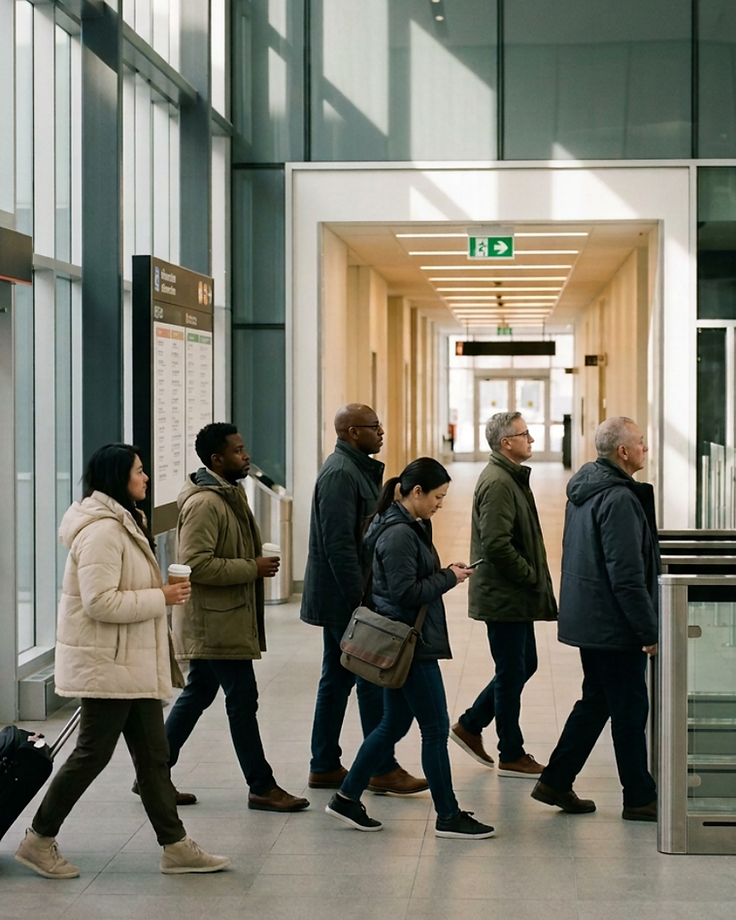
The first rule
When normal stops being normal, simplify.
You may not know exactly what's happening. You may feel confused, frozen, shaky, angry, numb, or like your brain has stopped contributing to the group project.
You don't need to understand everything before taking a useful next step.
Move away from immediate danger if you can do so safely.
- Leave the area.
- Move away from the source of danger.
- Use exits, doors, stairs, public routes, or safer directions when available.
- Move toward people, staff, emergency personnel, a public place, or a safer location.
- Leave belongings behind if carrying them slows you down or makes leaving harder.
- Don't stop to investigate, film, argue, or gather more information if moving is the safer option.
If you can't safely leave, find a safer place to shelter.
- Move out of view or away from the immediate area if possible.
- Use a room, barrier, interior space, protected location, or other available shelter.
- Lock or block entry when it's safe and possible.
- Silence devices if it's safe and appropriate.
- Keep an exit option in mind where possible.
- Stay quiet and wait for clear official information or instructions.
Call or text 911 when it's safe to do so.
- Contact emergency services if you can.
- Give the clearest location and simple facts you know.
- Follow dispatcher instructions.
- If you can't call, use the safest available way to alert someone when possible.
- Don't assume someone else has already called.
- Don't put yourself at greater risk to make a call.
Follow instructions from emergency personnel and authorities.
- Keep hands empty and visible when first responders arrive.
- Avoid sudden movements toward emergency personnel.
- Follow directions about where to move, wait, or evacuate.
- Don't return to an affected area until authorities say it's safe.
- Once safe, contact a trusted person if you can.
- Seek medical, practical, emotional, or community support afterward if needed.
Your goal isn't to become the main character. Your goal is to get safer.
- Distance, exits, cover, people, help, and clear information are usually more useful than trying to figure everything out.
- Your goal isn't to become the main character. Your goal is to get safer.
- You don't have to be calm to take a useful next step.
- Boring wins. Especially here.
Start with what's happening
What kind of emergency is this?
Choose the one that fits. You can change your mind. You don't need to provide your location or any personal details.
Keep it handy
Two tools for before it happens.
Both stay on your device only. No account, no email, no server storage.
Official sources
Official emergency resources.
Official guidance can change. Follow local authorities and emergency personnel in a real emergency. FBI and CISA are U.S. government resources.
Government of Canada: Emergency preparedness
Official Government of Canada resourceOfficial Canadian information about preparing for emergencies.
View official guidanceLeave Early emergency and support resources
Leave Early resource hubFind verified Canadian pathways for support after an emergency, victim services, and other help.
Find supportFBI Active Shooter Safety Resources
Official U.S. government resourceOfficial U.S. public resources about preparing for and responding to active-shooter incidents.
View official guidanceCISA Active Shooter Preparedness
Official U.S. government resourceOfficial U.S. preparedness resources, planning information, and public guidance for active-attacker incidents.
View official guidanceLast reviewed: 2026-09-16. Official guidance can change. Confirm current information through official Canadian, provincial, territorial, and local emergency sources.
If your situation involves ongoing control, abuse, stalking, or barriers that make leaving unsafe or difficult, visit: When leaving isn't simple.
Go to When leaving isn't simpleYou don't need to know everything to take one useful step.
This is emergency information without the posturing.